How much life insurance can I buy?

A 71-year-old client called me a couple of days ago to talk about life insurance.

He and his wife are refinancing their house and he wasn’t sure they’d make it to see the end of the 30 years.

He and his wife are the second and third 65+ clients who wanted to talk about life insurance in the past month.

Life insurance is almost always a great idea, but we would have had a lot more options if we’d had these conversations 20 or even 10 years ago.

Let’s take a look at what would happen if you had $250 a month to spend on life insurance — it seems like a lot of money, but let’s see how much coverage you get for that money.

Similar to For the best value, get life insurance when you’re young, I’m just using premium estimates for Farmers life insurance and a non-smoker in average health, but the numbers are going to be similar regardless of where you look. And age isn’t the only consideration, but it is a large factor in answering our question, “how much life insurance can I buy?”

For a 21-year-old, $250 a month buys a crazy amount of insurance. He’d be able to get almost $4.3 million with a 10-year term (blue line). Why? Because most people live past their 31st birthday. (Even it’s a 10-year term, get life insurance when you’re young — your older self will thank you for it.

If he pays $250 for a 20-year term (red line), he’s going to get $2.1 million. With a 30-year term (orange line) he’s going to get almost $1.9 million. Again, most people live past their 51st birthday.

The green line is the line for whole life insurance. It’s dwarfed by the term policies, but $420,000 is still a whole lot of money to leave your family.

It’s not really fair to compare a whole life policy to a term policy in a chart like this — permanent policies have a lot more benefits than this chart shows — but I want to show how options dwindle as people get older.

Our hypothetical wage-earner doesn’t get as much when he’s 40, but he’s still getting a whole lot of bang for his buck. Almost $2.4 million for a 10-year term and $193,000 in whole life.

He can still get a 30-year-term life insurance when he’s 50. But he can’t at age 51 — from an insurance company’s point of view, there’s too much risk that he’s going to die before he turns 81.

The 20-year term is still an option at age 60, but not at 61.

At 70, a 10-year term is still an option, just not for the $250 a month we said we wanted to spend. A $150,000 10-year term on a 70-year-old is just under $400 a month.

That green line is still hanging around, though. Our hypothetical man can still get life insurance up to age 80, but by this time we’ve moved out of the realm of taking care of his family and into having enough money for burial expenses.

Questions? Let me know, I’m always happy to help.

You can email dgragg@farmersagent.com or call my office at 417 708 9583.
For the best value, get life insurance while you’re young

I’ve said it before, life insurance is an emotional decision, for you and the ones you’re leaving behind.

But let’s take a look at some cold, hard numbers for just a couple of minutes.

Let’s look at life insurance and the timing as an investment. How much does it cost versus how much does your family get when you die? Are you better off waiting to buy life insurance?

The above chart shows the rate of return on term life insurance policies for a man at three different points in his life.

(These estimates are all with Farmers New World Life, but it’s going to be a similar picture for whatever company you decide to go with).

The blue line is the rate of return for the man buying a $150,000, 30-year term policy when he’s 45 years old. So if he buys it and dies the next day, he would have spent about $100 (a single premium payment) and his family will receive $150,000 for return on investment of $149,900.

If he dies at the age of 75, he will have spent about $33,000 on life insurance and his family will receive $150,000 for a return on investment of $116,000 — a pretty nice chunk of change and a lot better ROI than anything you’ll get in the stock market.

The red line shows what would happen if the same man waited until he was 55 before he bought a $150,000 policy. Since he’s 10 years older, he can’t get a 30-year term anymore, so he buys a 20-year term that will take him to age 75.

At first glance, the return looks better, especially at first. If he dies at 56 he’ll have only spent $1,600 for the $150,000 payoff. Meanwhile the 45-year-old sucker has paid an extra $10,000 for those 10 years of coverage.

But there are some rather large caveats here: 1) It assumes he didn’t die in a car accident at age 50, in which case his family would have absolutely bubkis. 2) It also assumes he didn’t develop cancer. Or diabetes. Or high blood pressure. Or asthma. Or any number of other ailments that would make it more expensive or impossible to buy life insurance at age 55.

In addition, the better rate of return flattens out rather quickly. At age 55, the difference is $10,000. At age 75, the difference is barely $1,000.

The 65-year-old version of our example is in orange. If he dies at 66, he’s saved $16,000 over the 55-year-old version and a whopping $21,000 over the 45-year-old version.

But now he’s had an extra 20 years to die in a fiery collision or develop medical issues. He could save that $21,000, or he could spend it to make sure his family is taken care of.

Again, the better return drops to about $11,000 when he reaches age 75.

That’s a whole lot of risk to save $11,000 on a $150,000 payoff.

Please don’t think this is an excuse to not buy life insurance because you’re “too old.” In fact, the whole reason I got to thinking about it is because I have a 69-year-old client who wanted to make sure his wife was taken care of after he died.

I’ve just heard the “I’m too young for life insurance” or, “It’s OK if I wait for life insurance,” excuses a lot.

I have some more charts that talk about whole life later. Questions? Shoot me an email at dgragg@farmersagent.com

Life has a way of sneaking up on you

At the start of December, I thought I was bopping my way through things pretty well.

My agency has continued to grow — big enough that I had to ask my wife, Martie, to come in and help me in the mornings.

She’s been great at it, but we knew she was going to have to quit when our third son was born.

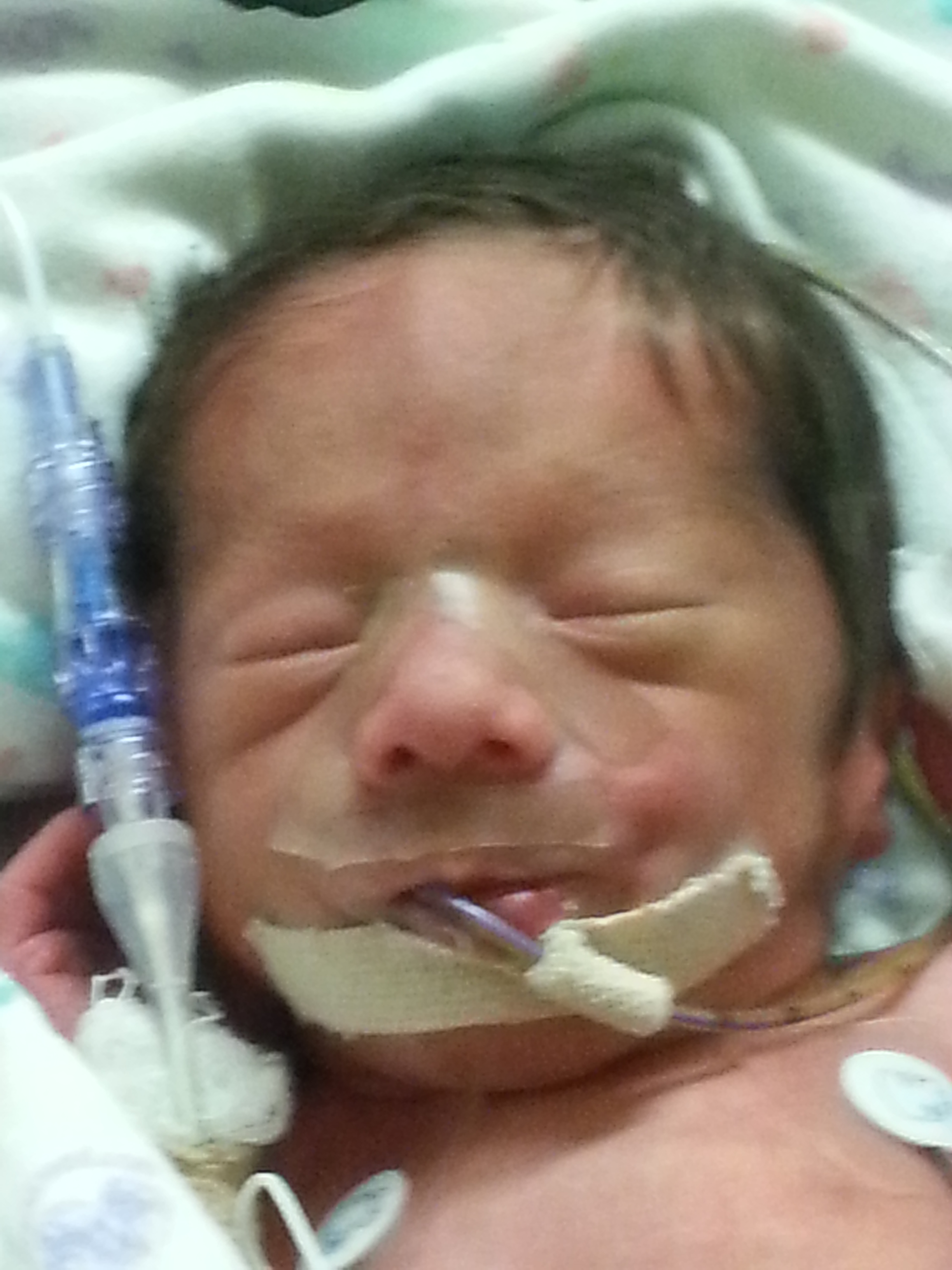
My son, a couple of days after he was born
My son, a couple of days after he was born.

I hired Misty to be a telemarketer while Martie was still in the office. Misty was going to work on getting her licenses and move to a full-time role in the office once Martie transitioned back to a full-time mom.

Since our son wasn’t scheduled to arrive until Feb. 5, we thought we had some time to get everything in place.

He had other plans, arriving almost two months early.

So I had several things happening through the month of December:

  1. The woman I relied on to help me in the office suddenly had other things to do — namely spend time with our son in the NICU as well as our other kids.
  2. I suddenly had other things to do — see above.
  3. My telemarketer hadn’t gotten any training or licenses yet, so she wasn’t ready to be the help I needed.
  4. Christmas shopping — because what kind of a maniac has Christmas shopping for their kids done by Dec. 6?

We had a lot of help during that month, but we finally got Gabe out of the hospital less than two weeks ago and now we’re slowly settling back into a routine.

It was a good surprise — an amazing gift — but it has definitely changed our lives.

My job as an insurance agent is to help people prepare for the life-changing events that don’t always have a happy ending.

Home insurance, auto insurance, life insurance, business insurance, they’re all just ways to help insulate you from car accidents, tornadoes, the death of a loved one.

So that you can bounce back when life sneaks up on you and hits you with something that changes everything.

Three things to get your car ready

It’s not really cold yet, but it is dreary.

And rainy.

And it won’t be long now.

Winter

Are you ready? Is your car? Here are three things you can do to make sure it is.

1) Check your tires.

Driving in ice and snow is all about momentum — building it or stopping it. The four square feet of rubber that touch the ground is vital in either case.

2) Check your radiator.

Make sure your car has enough antifreeze to survive a sub-zero night on the driveway.

3) Talk to your insurance agent about your coverage (you have an agent, right?).

* Do you have enough liability coverage to protect yourself if you do slide into someone?

* Do you have enough Uninsured & Underinsured Motorist protection in case someone slides into you?

* Do you need full coverage on your vehicle?

* Do you have backup transportation or would you need to rent a car if yours is in the shop for a week, or do you need rental reimbursement coverage?

* Do you want towing and roadside in case you slide into a ditch?

What does uninsured and underinsured motorist coverage do?

Uninsured Motorist & Underinsured Motorist coverage is an afterthought for a lot of folks, but it’s a vital component to your auto insurance.

You may have them and not even know about it (In Missouri, you have to have Uninsured Motorist coverage of at least $25,000 per person and $50,000 per accident.)

Motorcycle accident

Uninsured and Underinsured Motorist coverages are what protects you and anyone in your car if you’re in an accident that’s not your fault and the other guy either doesn’t have insurance (Uninsured Motorist), or he doesn’t have enough insurance to pay your medical bills and lost wages (Underinsured Motorist).

Here’s real-life example: One of my clients was a passenger on a motorcycle when the driver missed a turn. My client ended up in intensive care for several days.

The motorcycle driver did have insurance, including $25,000 worth of passenger liability protection.

But there’s little to nothing left of that $25,000 after four days in an ICU, so she filed a claim with the Underinsured Motorist coverage she has with me to help with the rest of the bills.

She may also be able to use that money to recover some of the income she’s losing because she can’t go to work.

I’ve talked about the dangers of the auto insurance “race” before — missing out on uninsured and underinsured motorist is another danger in making a snap judgement on car insurance.

I’ve seen people with one limit on their Bodily Injury but the state minimum for Uninsured Motorist and nothing at all for Underinsured Motorist. I’ve never been able to figure out if their current agent was too lazy to explain the coverage or too worried about losing a sale over a couple of extra bucks.

If that’s ever happened to you, may I suggest talking to an agent who will take the time to explain coverages to you?

If you have health insurance, it would cover the medical bills, but it wouldn’t cover the lost wages from not being able to work for a week, or a month, or six months, or however long you’re out of work.

And there aren’t many medical bills if you died in the accident, so your health insurance really wouldn’t be much good at all. (This is another place life insurance is pretty important, by the way.)

Do you remember this case with another car insurance company a few years ago?

You don’t even have to be in a vehicle for Uninsured and Underinsured Motorist coverage to protect you.

If you’re taking your dog for a walk and someone hits you in their car and drives off, your Uninsured Motorist coverage is going to help pay for your medical bills and your lost wages because of that driver.

Motorcyclists often think they don’t need much insurance because they probably won’t do much damage to anyone else if they’re ever in an accident that’s their fault.

That’s probably true (although there are always exceptions) but I’ve lost count of how many motorcycle accidents I’ve seen that seriously injured or killed the motorcyclist that wasn’t the motorcyclists’s fault.

Do you really want to make a bet that the other driver has enough coverage to pay your medical bills? Or would do you rather take your protection in your own hands?

photo credit: Baiazid via photopin cc

Life insurance: Stop and think about it

Even thinking about life insurance can be more than a little frightening.

It’s an emotional decision: You’re admitting your own mortality. (Yeah, sorry Sunshine. You’re going to die. I hope it’s after a long and happy life. But the Angel of Death is standing by.)

Everyone knows it. Believing it is a different story.

It’s also a financial decision: Should you spend money on this? You have other bills to pay.

But what would happen to your family if something happened to you? If money’s tight now, imagine what would happen if you died in a car accident on the way to work. Would they be able to stay in your home? Would they have to rely on help from family members to pay the bills?

Life insurance gift


Full disclosure here: Insurance — including life insurance — wasn’t something I’d thought about before I became an insurance agent. I had what I could get through work and figured my wife would figure it out after that.

What I had through work was about a year’s salary. My family’s kinda counting on me to be around and pay the bills for longer than that.

My wife is an amazing woman. But I was — and still am — the one paying most of the bills. If something had happened to me, she would have had to deal with the loss of a husband, father and wage-earner all in one fell swoop.

And I really should have known better. I was a newspaper reporter and editor in my former life. Bad things happening to other people was a good chunk of my job: We reported on auto accidents, illnesses, fire, crime and a host of misfortunes on a weekly if not daily basis. A lot of these people had done nothing wrong. They were just in the wrong place at the wrong time.

All too often, the stories would end with, “The family is collecting donations to pay for expenses.”

That’s not something I want to leave my family to deal with. How about you?

But let’s look at it another way.

Let’s assume you make $30,000 a year.

You have insurance on your car. Let’s assume that it’s a $20,000 car. That’s nine months worth of salary.

You have insurance on your home. Let’s figure that at $150,000. That’s five years worth of salary.

Life insurance is insurance on your income. Let’s just figure 10 years worth of income, even if you never get a raise, that’s $300,000.

And you don’t have insurance on it?

Talk to someone about life insurance. It’s a big decision, so make sure you know what your options are. I happen to know a guy, but talk to someone.

The dangers of the car insurance “race”

You’ve heard the ads:

“15 minutes could save you 15 percent!”

“Welcome to the modern world. Save in half the time!”

First of all, I hadn’t realized it was a race.

8389c-small__2605527401

Price is important, nobody understands that better than me. The best auto insurance in the world does you no good if you can’t afford it.

But the battle over whether the protection of everything you own is worth a quarter of an hour vs. 7 1/2 minutes?

That really is what we’re talking about here. It’s not just your car you’re protecting, it’s also your assets.

Now then, I know you have an excellent driving record and you would never get into an accident that’s your fault. But let’s pretend for a moment that you do get into an accident and you send someone to the hospital.

The accident is your fault, so it’s your responsibility to pay for the other guy’s hospital bills and the pay he’s not receiving because he is in the hospital.

If someone dies in that accident, you’re responsible for not only their burial costs, but all of the money that he won’t make to take care of his family.

Your insurance company will pay all those bills, that’s it’s job. But it’s only going to pay the bills up to the liability limits that you’ve set up.

If you haven’t set those limits high enough, you may have to pay for the hospital bills and the lost wages with whatever money you have in your bank account, whatever assets the court says is claimable, plus whatever wages the court says can be garnished.

That’s what those ads promising “quick and easy” don’t tell you and that’s why it’s worth a lot more than just 15 minutes. That’s why it’s worth talking to an agent about what coverages are right for you.

But at least it’s not Norm McDonald extolling the benefits of just doing the minimum. I really hate those ads.
photo credit: sdowen via photopin cc

Life insurance for young adults

My telemarketer was coughing last night.

(First of all, yes, I have telemarketers. Yes, I know it can be annoying, but I’ve been able to help a lot of people with telemarketers. So please be nice if we happen to give you a call, OK?)

In any case, she was coughing, so I asked if she was going to die on me. She said she thought she might.

“Well, at least talk to me about life insurance first,” I told her.

“No, I’m not old enough for life insurance,” she said.

OK, hold up. We were joking around, but now we have to have a conversation. In about two minutes I threw together a proposal and made her come sit in the office.

If there is a possibility that someone, at some point in your life, will be financially devastated by your death, you need life insurance.

At 18, she’s footloose and fancy free, she’s not supporting anyone other than herself.

However, life insurance for her will never get cheaper than it is right now. That’s why I have life insurance on my kids.

Plus, there are life insurance options that build up a cash value. That cash value can make the policy pay for itself or even build up enough to pay for other stuff, like a down payment on a home, or to supplement a retirement. The longer the time frame (the younger you are when you buy it), the bigger and quicker the return possibilities. That’s also why I have life insurance on my kids.

And it’s a whole lot easier to get life insurance before the years start falling behind you, the cholesterol starts collecting in your arteries and the fat starts collecting everywhere. (Technical term here is “protecting your insurability,” just in case you’re keeping track of buzzwords.) That’s another reason I have life insurance on my kids.

So, if she ever thinks she may need a chunk of cash at some point in her life, life insurance is a good way of building that up.

If she ever plans to have kids, she’s going to need life insurance. Yes, even for stay-at-home moms. (Do you have any idea how much day care is? That’s why my wife stays at home. It’s also why I have life insurance on her).

It’s kind of like the old joke about trees. The best time to plant a tree is 20 years ago. The second best time is now.

The best time to get life insurance is 20 years ago. The second best time is now.

Food Contamination Shutdown — Business coverage for restaurants

Most of the time, a case of food poisoning means we won’t be getting too far from the bathroom for a while. Uncomfortable, but something we’ll recover from.

For a restaurant, it could be mean the end of a business.

I heard an ad on the radio the other day, a Springfield restaurant owner trying to lure customers back after a well-publicized series of health inspection failures.

If you’re in the Ozarks, you’ve probably already heard the ad or the closure, so I won’t go into details.

But if you’re a restaurant owner, I hope it makes you question, “What if?”

That’s the basis of my job as an insurance agent — asking “What if?” then finding a way to plan for it before it happens.

So, What if my restaurant had to shut down because of food poisoning?

Food contamination shutdown and food-borne illness business interruption are two of the coverages that you can include with your Restaurant Business Owners Package with Farmers.

Similar to business income insurance, these two coverages can pay for the loss of income if the health department shuts down your restaurant because of an actual or suspected contamination.

It can also help pay for loss of income because the health department announces that a case of food poisoning was traced back to your restaurant — or another restaurant with the same name.

Obviously, your best line of defense is keeping an eye on your kitchen staff to make sure nothing happens in the first place. But these are two ways Farmers can help you get back to where you belong.

Vacant houses

When it comes to your vacant home, what your insurance agent doesn’t know can hurt you.

I had a woman call me yesterday because she just found out that the insurance on her house in Springfield no longer covered much of anything. Why? Because she put it up for sale when she moved to Texas two months ago.

05a19-home-for-sale

She never realized there was a problem until last month’s wind storms blew through the area and her Realtor told her she had some roof damage. So she called her insurance agent, who told her that since the home had been vacant for more than a month, most of her coverage was no longer in force.

Insuring vacant homes are different than homes that are occupied or even just temporarily unoccupied — There’s no one around to see if the air conditioner has been stolen, or a water line breaks, or any number of other problems arise with the home. And liability risks are different as well — you don’t usually have to worry about someone sneaking into your home and setting up a meth lab while you’re still living there.

So how do I get insurance on a vacant home?

Foremost Insurance is one of the nation’s largest insurers of specialty dwellings — including mobile homes, properties with too many claims for other companies, and yes, vacant homes.

This is one of those life lessons that I’m lucky I didn’t have to learn the hard way. When we moved from Texas back to Missouri, I didn’t even think about the insurance until after we sold the house. It never even occurred to me that my insurance would no longer cover my home if I wasn’t living there.

It’s also one of the reasons having an agent and talking to your agent on a regular basis is a good idea.

Make sure to talk to your insurance agent if you’re moving out of your home and find out what your vacant home coverage is, then give me a call at (417) 708 9583 and let’s see what Foremost and Farmers can offer.