How do I save money on my insurance?

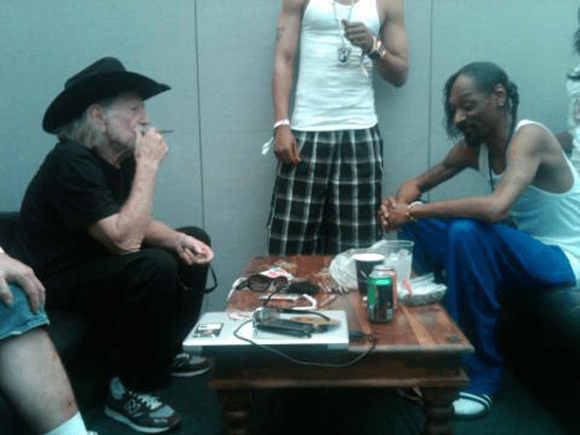
Insurance rates were last seen hanging out with these two. I’d normally give credit for the photo, but I found it on Reddit. It’s Willie Nelson and Snoop Dogg. In Amsterdam. You do the math.

I’ve been getting a lot of calls lately, from my clients as well as folks with other insurance companies.

“Why is my car/home insurance so high?”

It’s a fair question.

There are two reasons rates keep getting higher and it’s true for both home and auto insurance.

1) The number of claims is going up. (You can blame bad drivers and climate change for that)

2) Claims are getting more expensive. (Inflation, worker shortages and supply chain issues get the credit here)

To put it another way, insurance is a way of spreading out the pain. And there’s been a lot of pain to go around lately.

So, the question becomes, “How do I save money on my insurance?”

1) Get a local agent. Yes, I am an agent and yes, this one is a bit self-serving. But we’re specialists. Find a couple of specialists and ask them for quotes. Make them explain what coverages they’re recommending and why. Go with the one who can come up with the best combination of price and coverage.

You won’t get that from an 800 number or a website.

An agent can also help you decide whether decide whether anything else on this list makes sense for you.

2) Take a look at your deductibles and other “extras” like rental reimbursement.

This one comes with a really big caveat: Don’t lower your liability limits or how much you’re insuring your home for. Rates are going up because you’re more likely to need your insurance. Now is not the time to start skimping.

That said, you will be able to save money by raising your deductible. You’ll have to decide whether the lower premium is worth the higher risk.

If raising your car insurance deductible from $500 to $1,000 saves you $60 a year, keep the $500 deductible.

But if raising your home insurance deductible from $1,500 to $2,500 saves you $300 a year? That’s probably worth it.

And if there are two drivers and three vehicles, do you really need rental reimbursement on your auto insurance? Or would you be able to use the third vehicle?

3) Credit score. Yeah, sorry, that one affects your rate, too.

Underwriters say there’s a correlation between how well you keep track of your finances and how likely you are to have a claim.

So, if your life is more stable than it was when you first started your insurance, it may be worth asking your agent for the company to rerate you based on who you are now.

And if you’re asking around for quotes, make sure the agent checks whether it’s cheaper to put you or your spouse as the first named insured (That’s whose credit they’ll check).  

BTW, it is considered a “soft hit” so getting an insurance quote doesn’t affect your credit score.

4) Discounts. This the one that all the ads like to talk about. And a local agent can help find discounts you didn’t know you qualified for.

A quick rundown of a few you may not know about:

  • Bundling (Package several types of policies like home, auto, life, business, boats, etc., together and you usually get them cheaper than getting them each individually. I’ve even seen instances where the package was cheaper than the auto by itself)
  • Homeowner (For auto insurance)
  • Good student (As if you needed another reason to encourage the kid to get good grades)
  • Pay plan (The cheapest ways to pay are usually pay all at once or with an automatic draft from a checking account)
  • Where you work (Sometimes your occupation can get you a discount)
  • ePolicy (Get your policy emailed to you instead of a hard copy)
  • Early shopping (Yes, you can get a discount if you don’t need to start your insurance right away)
  • Updated equipment (Have you updated your plumbing, HVAC or electrical systems? You may be able to reduce your home insurance premium)
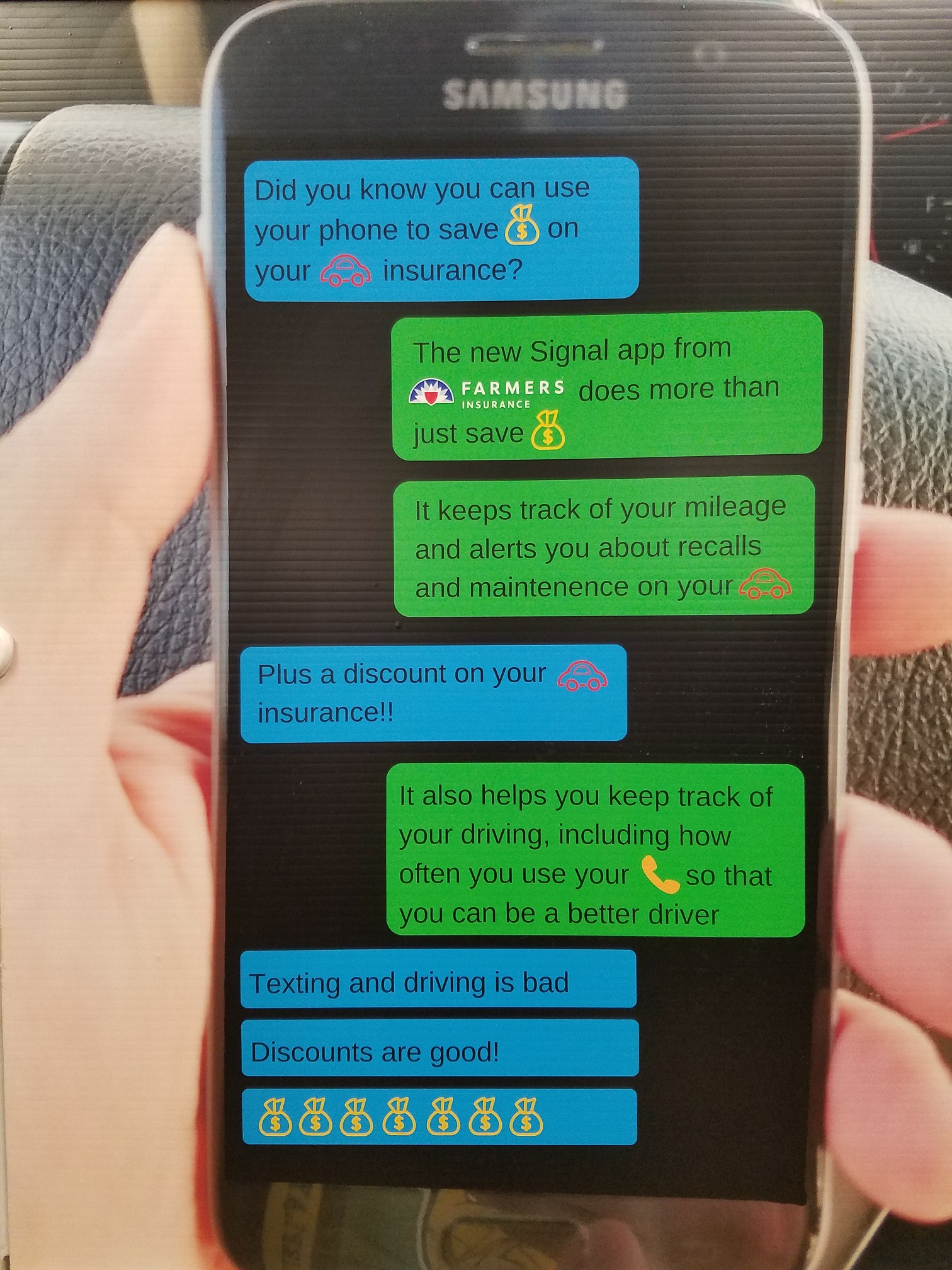
5) Auto trackers. Technically this one’s a discount, but these are worth talking about a little more.

Before I started selling insurance, I got a discount for plugging a little doohickey into my car that kept track of some of my driving habits. That was almost 15 years ago.

Now most companies have a phone app that monitor your speed, your mileage, and — probably most importantly — when you’re on your phone as you drive. (Remember when I said there are more crashes because of bad drivers? Drivers distracted by their cell phones is right at the top of the list of problems)

I was hesitant when Farmers rolled its out, but the app isn’t doing anything your phone doesn’t already do, it’s just sending the information to one more place.

These apps are a few years old now and I expect them to get more important as time goes on.

I had one client tell me she found an insurance company where she could “pay as you go.” The trick is not crossing the line between tracking and stalking.

Unfortunately, folks, there are no magic bullets, just a couple of suggestions until we get past the current craziness.
Me and the Mother Road

My insurance agency sits on one of the paths Route 66 took through Springfield., Mo.

It’s not the first time America’s Main Street and I have bumped into each other, so it made sense to have a few mementos of our meetings as I decided on the office decor.

Jerry Rice Downtown Springfield
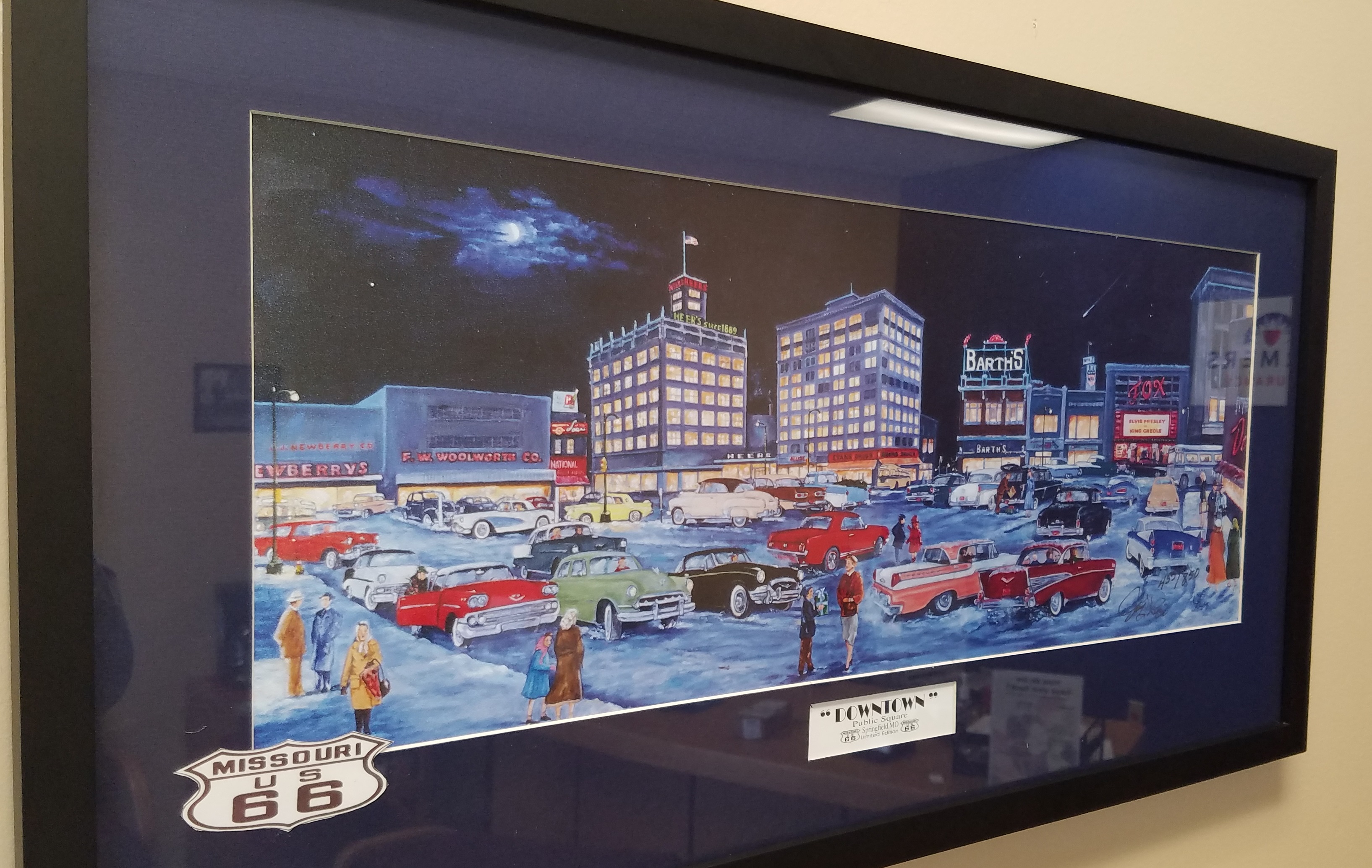
“Downtown” shows downtown Springfield, Mo., as it appeared in 1964, when the square was open. You can see the Heer’s Building as well as the Fox Theater. Artwork by Jerry Rice

Most of my decorations are the kitschy stuff you can get anywhere, but I do have a couple of pieces I’m proud of.

I got to add a piece to the collection I’m proud of this week.

Jerry Rice paints Route 66 scenes from the Mother Road’s heyday in Southwest Missouri.

This one, that he calls “Downtown” shows the square in Springfield back before they added the park.

Bill Curry Route 66 Celebration.jpg
“Tourist Enchantment,” commemorates Route 66’s Diamond Jubilee in Tucumcari, N.M. Art by Bill Curry

My first run in with Route 66 was in 2000, when I became the editor of a semi-weekly newspaper in Tucumcari, N.M., one of the little towns that thrived during Route 66’s peak.

The Mother Road had its Diamond Jubilee the next year and the celebration committee asked artist Bill Curry to commemorate the event with a painting.

This print has been traveling around with me since 2001.

If you’ve ever seen the movie “Cars,” the movie has several nods to real towns and people connected to the road. Tucumcari Mountain, there behind the Corvette, inspired the mountain that looks like a radiator cap in Radiator Springs.

As part of that 75th anniversary celebration, my paper put out a brochure that talked about the history of the Route. One of the articles in the brochure was written by Route 66 historian Michael Wallis, who was the voice of the sheriff in the movie.

Old map
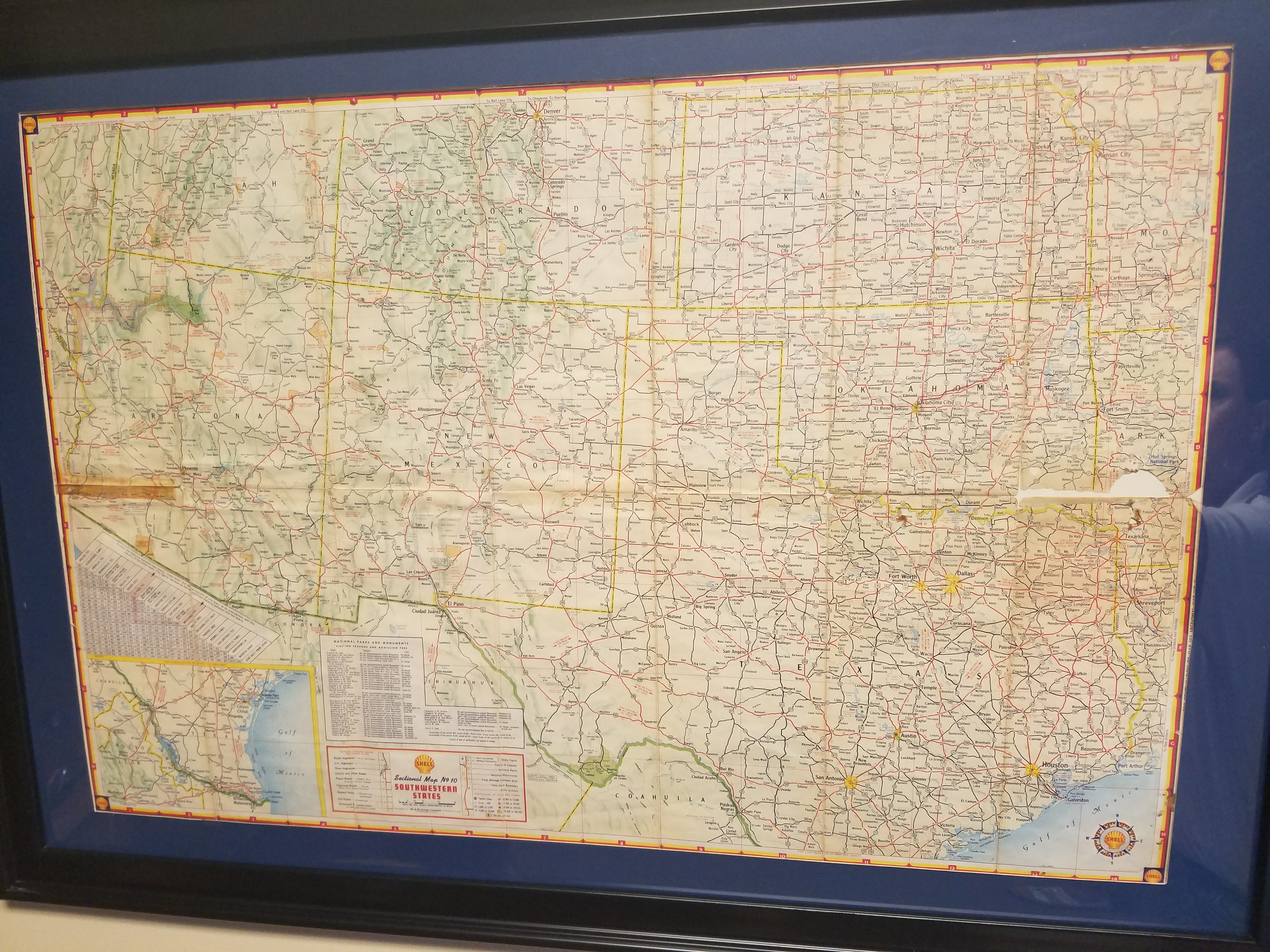
The map doesn’t even show Chicago (where Route 66 started) or Santa Monica, Calif., (where it ended, but this map shows most of the Mother Road. Map framing by Beth Gragg

The one I’m probably the most attached to, though, isn’t traditionally considered a work of art and isn’t even centered on Route 66.

It’s an 50-year-old map that my grandparents had. It shows the Southwest United States, including most of the places Route 66 went.

My granddad had a gas station in Urich, Mo., so I’m not sure if this map is from the time when gas stations handed out road maps or if it was a map my grandparents actually used to visit California.

As a side benefit, the map shows most of the places my life has taken me.

The map doesn’t quite go far enough north to get to Kirksville (where I went to Truman State University) or small enough to get Montrose (the tiny town where I grew up), but the rest are there: Not only Tucumcari and Springfield, but Dodge City, Kan., and McAllen, Texas.

I also have a number of prints from the early days of Farmers Insurance. No direct tie to Route 66, there, either, although Farmers started in 1928, two years after the Mother Road’s start in 1926.


Life has a way of sneaking up on you

At the start of December, I thought I was bopping my way through things pretty well.

My agency has continued to grow — big enough that I had to ask my wife, Martie, to come in and help me in the mornings.

She’s been great at it, but we knew she was going to have to quit when our third son was born.

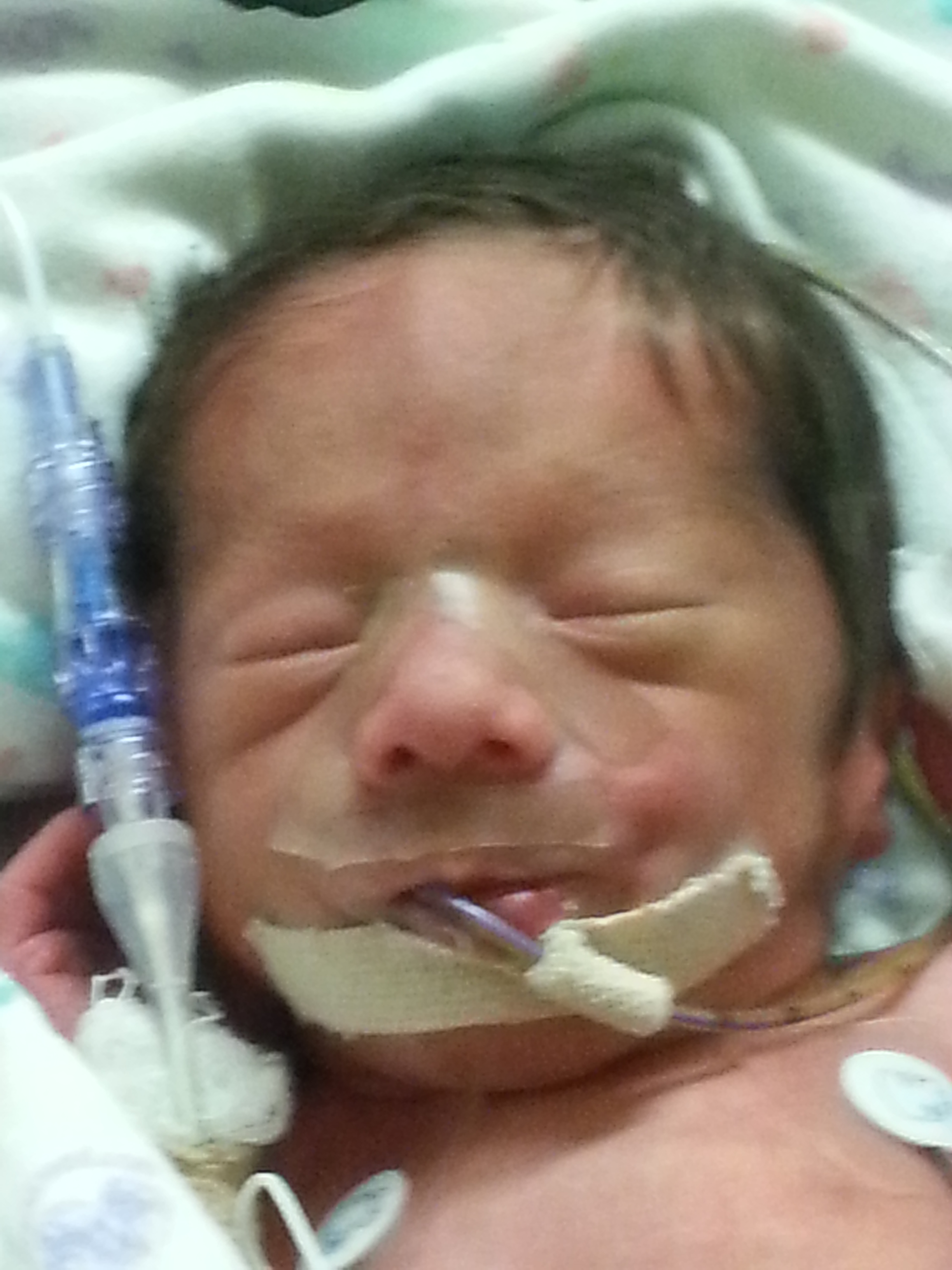
My son, a couple of days after he was born
My son, a couple of days after he was born.

I hired Misty to be a telemarketer while Martie was still in the office. Misty was going to work on getting her licenses and move to a full-time role in the office once Martie transitioned back to a full-time mom.

Since our son wasn’t scheduled to arrive until Feb. 5, we thought we had some time to get everything in place.

He had other plans, arriving almost two months early.

So I had several things happening through the month of December:

  1. The woman I relied on to help me in the office suddenly had other things to do — namely spend time with our son in the NICU as well as our other kids.
  2. I suddenly had other things to do — see above.
  3. My telemarketer hadn’t gotten any training or licenses yet, so she wasn’t ready to be the help I needed.
  4. Christmas shopping — because what kind of a maniac has Christmas shopping for their kids done by Dec. 6?

We had a lot of help during that month, but we finally got Gabe out of the hospital less than two weeks ago and now we’re slowly settling back into a routine.

It was a good surprise — an amazing gift — but it has definitely changed our lives.

My job as an insurance agent is to help people prepare for the life-changing events that don’t always have a happy ending.

Home insurance, auto insurance, life insurance, business insurance, they’re all just ways to help insulate you from car accidents, tornadoes, the death of a loved one.

So that you can bounce back when life sneaks up on you and hits you with something that changes everything.

Three things to get your car ready

It’s not really cold yet, but it is dreary.

And rainy.

And it won’t be long now.

Winter

Are you ready? Is your car? Here are three things you can do to make sure it is.

1) Check your tires.

Driving in ice and snow is all about momentum — building it or stopping it. The four square feet of rubber that touch the ground is vital in either case.

2) Check your radiator.

Make sure your car has enough antifreeze to survive a sub-zero night on the driveway.

3) Talk to your insurance agent about your coverage (you have an agent, right?).

* Do you have enough liability coverage to protect yourself if you do slide into someone?

* Do you have enough Uninsured & Underinsured Motorist protection in case someone slides into you?

* Do you need full coverage on your vehicle?

* Do you have backup transportation or would you need to rent a car if yours is in the shop for a week, or do you need rental reimbursement coverage?

* Do you want towing and roadside in case you slide into a ditch?

The dangers of the car insurance “race”

You’ve heard the ads:

“15 minutes could save you 15 percent!”

“Welcome to the modern world. Save in half the time!”

First of all, I hadn’t realized it was a race.

8389c-small__2605527401

Price is important, nobody understands that better than me. The best auto insurance in the world does you no good if you can’t afford it.

But the battle over whether the protection of everything you own is worth a quarter of an hour vs. 7 1/2 minutes?

That really is what we’re talking about here. It’s not just your car you’re protecting, it’s also your assets.

Now then, I know you have an excellent driving record and you would never get into an accident that’s your fault. But let’s pretend for a moment that you do get into an accident and you send someone to the hospital.

The accident is your fault, so it’s your responsibility to pay for the other guy’s hospital bills and the pay he’s not receiving because he is in the hospital.

If someone dies in that accident, you’re responsible for not only their burial costs, but all of the money that he won’t make to take care of his family.

Your insurance company will pay all those bills, that’s it’s job. But it’s only going to pay the bills up to the liability limits that you’ve set up.

If you haven’t set those limits high enough, you may have to pay for the hospital bills and the lost wages with whatever money you have in your bank account, whatever assets the court says is claimable, plus whatever wages the court says can be garnished.

That’s what those ads promising “quick and easy” don’t tell you and that’s why it’s worth a lot more than just 15 minutes. That’s why it’s worth talking to an agent about what coverages are right for you.

But at least it’s not Norm McDonald extolling the benefits of just doing the minimum. I really hate those ads.
photo credit: sdowen via photopin cc