How do I save money on my insurance?

Insurance rates were last seen hanging out with these two. I’d normally give credit for the photo, but I found it on Reddit. It’s Willie Nelson and Snoop Dogg. In Amsterdam. You do the math.

I’ve been getting a lot of calls lately, from my clients as well as folks with other insurance companies.

“Why is my car/home insurance so high?”

It’s a fair question.

There are two reasons rates keep getting higher and it’s true for both home and auto insurance.

1) The number of claims is going up. (You can blame bad drivers and climate change for that)

2) Claims are getting more expensive. (Inflation, worker shortages and supply chain issues get the credit here)

To put it another way, insurance is a way of spreading out the pain. And there’s been a lot of pain to go around lately.

So, the question becomes, “How do I save money on my insurance?”

1) Get a local agent. Yes, I am an agent and yes, this one is a bit self-serving. But we’re specialists. Find a couple of specialists and ask them for quotes. Make them explain what coverages they’re recommending and why. Go with the one who can come up with the best combination of price and coverage.

You won’t get that from an 800 number or a website.

An agent can also help you decide whether decide whether anything else on this list makes sense for you.

2) Take a look at your deductibles and other “extras” like rental reimbursement.

This one comes with a really big caveat: Don’t lower your liability limits or how much you’re insuring your home for. Rates are going up because you’re more likely to need your insurance. Now is not the time to start skimping.

That said, you will be able to save money by raising your deductible. You’ll have to decide whether the lower premium is worth the higher risk.

If raising your car insurance deductible from $500 to $1,000 saves you $60 a year, keep the $500 deductible.

But if raising your home insurance deductible from $1,500 to $2,500 saves you $300 a year? That’s probably worth it.

And if there are two drivers and three vehicles, do you really need rental reimbursement on your auto insurance? Or would you be able to use the third vehicle?

3) Credit score. Yeah, sorry, that one affects your rate, too.

Underwriters say there’s a correlation between how well you keep track of your finances and how likely you are to have a claim.

So, if your life is more stable than it was when you first started your insurance, it may be worth asking your agent for the company to rerate you based on who you are now.

And if you’re asking around for quotes, make sure the agent checks whether it’s cheaper to put you or your spouse as the first named insured (That’s whose credit they’ll check).  

BTW, it is considered a “soft hit” so getting an insurance quote doesn’t affect your credit score.

4) Discounts. This the one that all the ads like to talk about. And a local agent can help find discounts you didn’t know you qualified for.

A quick rundown of a few you may not know about:

  • Bundling (Package several types of policies like home, auto, life, business, boats, etc., together and you usually get them cheaper than getting them each individually. I’ve even seen instances where the package was cheaper than the auto by itself)
  • Homeowner (For auto insurance)
  • Good student (As if you needed another reason to encourage the kid to get good grades)
  • Pay plan (The cheapest ways to pay are usually pay all at once or with an automatic draft from a checking account)
  • Where you work (Sometimes your occupation can get you a discount)
  • ePolicy (Get your policy emailed to you instead of a hard copy)
  • Early shopping (Yes, you can get a discount if you don’t need to start your insurance right away)
  • Updated equipment (Have you updated your plumbing, HVAC or electrical systems? You may be able to reduce your home insurance premium)
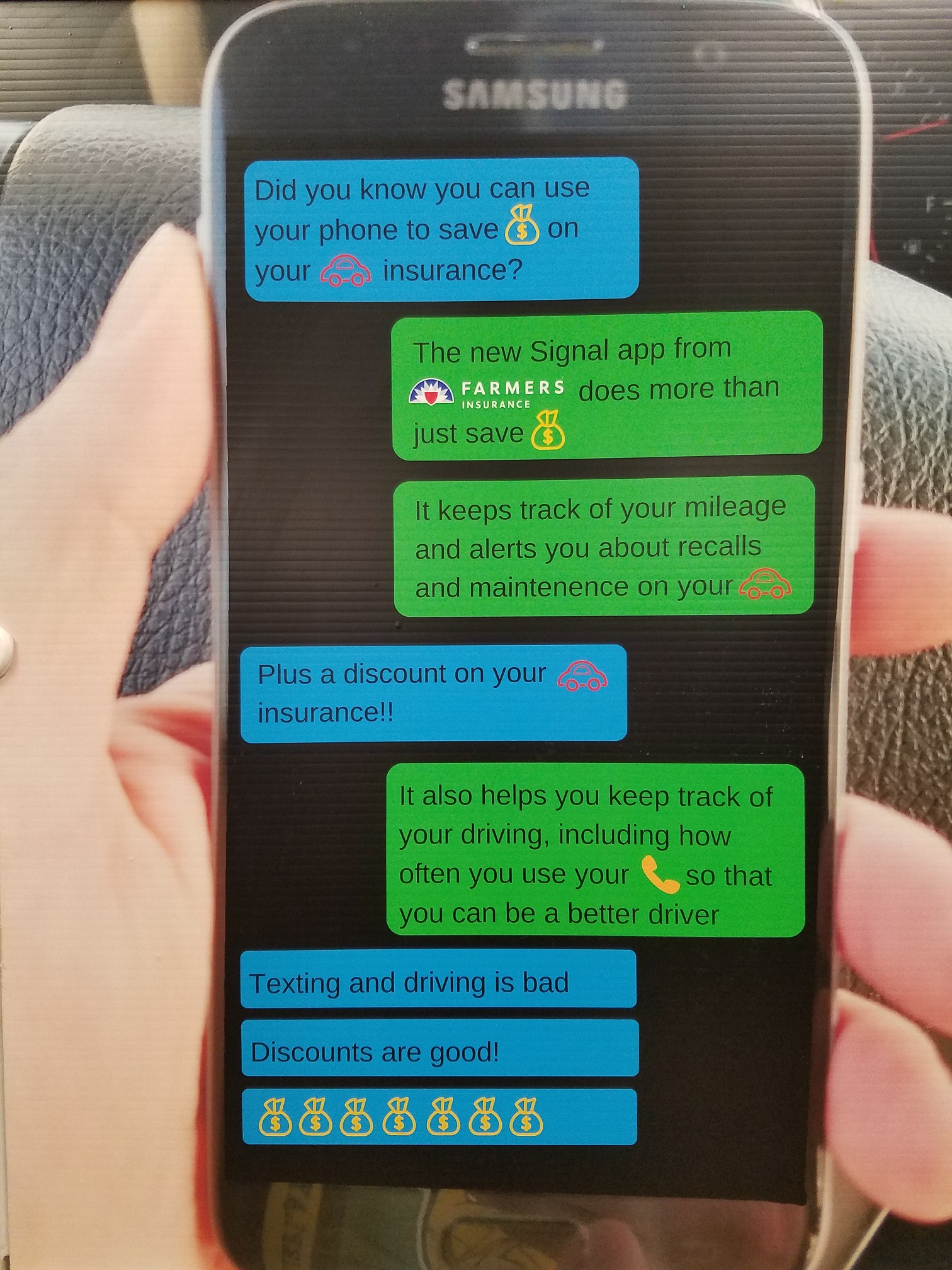
5) Auto trackers. Technically this one’s a discount, but these are worth talking about a little more.

Before I started selling insurance, I got a discount for plugging a little doohickey into my car that kept track of some of my driving habits. That was almost 15 years ago.

Now most companies have a phone app that monitor your speed, your mileage, and — probably most importantly — when you’re on your phone as you drive. (Remember when I said there are more crashes because of bad drivers? Drivers distracted by their cell phones is right at the top of the list of problems)

I was hesitant when Farmers rolled its out, but the app isn’t doing anything your phone doesn’t already do, it’s just sending the information to one more place.

These apps are a few years old now and I expect them to get more important as time goes on.

I had one client tell me she found an insurance company where she could “pay as you go.” The trick is not crossing the line between tracking and stalking.

Unfortunately, folks, there are no magic bullets, just a couple of suggestions until we get past the current craziness.

Putting the “Con” in contractor

I just got a note from our claims department.

They said they’re seeing a lot of out-of-town door knockers and fly-by-night contractors in Springfield and around the Ozarks. And they usually target seniors.

These contractors will walk up to your door and offer a free roof inspection, you just have to sign this little piece of paper and they’ll get started.

If they find damage — they target areas that have recently seen hail, so there’s a decent chance they will — you file an insurance claim and the company says that little piece of paper that you signed is actually a contract for them to do the work.

Insurance companies hate these guys. They typically do shoddy work and it’s more expensive than more established companies.

You know what happens when insurance companies have to pay more on a claim than they would have otherwise? Of course you do, your rates go up. Again.

And the contractor is no where to be found when you need them to fix their shoddy work.

That’s why I like local companies: I want to know where to go to yell at someone when something goes wrong.

Because even good companies sometimes get things wrong. The best companies are the ones who try to make it right afterward.

If you think you have hail damage, there are a lot of reputable roofing contractors in our area. Give the office a call and we can even recommend a couple.

Do you know the four disasters your home insurance doesn’t cover?

An attack by Godzilla is probably covered. Photo credit: http://godzilla.wikia.com/

Unless you have some weird, cut-rate version of home insurance, all policies are going to cover the basics.

Fire, tornado, theft, falling space debris, you know, the usual stuff.

An attack by a giant, fire-breathing lizard?

Probably covered.

But there are four disasters that are not going to be covered unless you specifically add them.

photo credit: Decatur FD Flood via photopin (license)
You think it’s dreary with day after day of rain? Wait until that rain starts coming in a house without flood insurance. photo credit: Decatur FD Flood via photopin (license)

1) Flood. That’s the one that’s on everyone’s mind right now, for stuff like this and this.

Flood insurance is handled by the National Flood Insurance Program and it’s a separate policy from your regular homeowners insurance.

If you live in a 100-year flood plain, your mortgage holder will require you to buy flood insurance (and they’ll notify you of the requirement before they give you a mortgage).

As side note, a “100-year flood plain” does not mean the area’s going to flood once a century. It’s shorthand for an area that has a 1 percent or greater chance of flooding in any given year. In other words, there’s a 26 percent chance of flooding during a 30-year mortgage.

I’ve seen places on a 50-year flood plain — which means there’s a 2 percent chance of flooding in any year — flood twice in five years.

But even folks who aren’t on a flood plain need insurance: According to the NFIP, 20 percent to 25 percent of all flood claims come from low-risk areas.

2) Sinkholes. What could be worse than the ground opening up to swallow everything you own? Finding out that most home insurance policies exclude “earth movement.”

That’s kind of a big deal for those of us here in Missouri. There’s a reason the Show Me State is also known as the Cave State. See, here’s one. And all the recent rain is making them even more threatening, like this one.

There aren’t many insurance companies that will help you here. I know of two and although Farmers isn’t one, Foremost (one of the companies we work with) is. If you’re worried about a sinkhole, you may be better off with the Missouri FAIR Plan’s standalone policy for sinkholes, similar to what the National Flood Insurance Program’s flood insurance.

photo credit: 080630-1010560 via photopin (license)

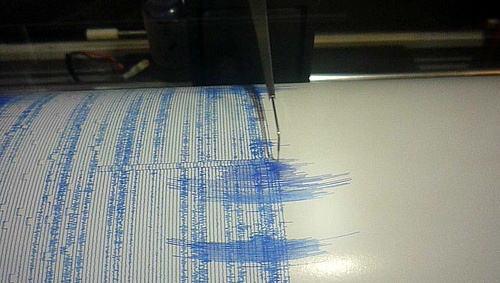
3) Earthquake. The “earth movement” exclusion falls into play here, too.

But there’s not much to worry about here, right?

A few small temblors around the Ozarks, mainly on the south side of the Missouri border, but nothing to be afraid of.

Except there’s that one thing you learned in school. Here’s how the state’s Department of Natural Resources puts it:

Most Missourians have heard of the more recent 1811-1812 flurry of quakes that were in the range of magnitude 7-8 and centered near New Madrid, Missouri. Because few people lived in Missouri in the early 1800s, impact to human life was minimal. The three major earthquakes in late 1811 and early 1812, however, did permanently change the course of the Mississippi River and created the Reelfoot Lake in the northwest corner of Tennessee.

Yeah, the largest earthquake in the country happened over on the east side of the state. Not a whole lot of people in Missouri two hundred years ago, so no biggie.

Any idea of what it would do now?

Out of the four big gaps in your home insurance coverage, earthquake is typically the easiest to fix. You just tell your agent you want to add an earthquake endorsement. It doesn’t add much to your premium — typically somewhere between $35 and $100 a year. However, the deductible is usually between 5 percent and 25 percent of your home’s value.

And in case you’re wondering, the earthquake endorsement only covers earthquakes, not sinkholes.

Yes, I'm totally just looking for a reason the show you a picture of my kids & grandkids. Aren't they adorable? These are some of the people who will be emotionally devastated by my death. But life insurance will make sure they won't feel it financially.
Yes, I’m totally just looking for a reason the show you a picture of my kids & grandkids. Aren’t they adorable? These are some of the people who will be emotionally devastated by my death. But life insurance will make sure they won’t feel it financially.

4. The death of a breadwinner.

This is the one that should be keeping you awake at night if you don’t have a policy in place to protect your family.

We like to think about our home being our biggest asset, but it’s not. Our biggest asset is our ability to earn money. If you’re not there to earn that money, what happens to the house? What happens to the people inside it?

Life insurance is not for you.

Life insurance is for the ones you leave behind.

It’s to make sure they can keep the house you’ve been working so hard to provide.

It’s to make sure they have food on the table and clothes on their backs.

It’s to make sure they can keep living the life you wanted for them.

All four of the disasters on this list are scary.

But No. 4 is the one that would have the longest impact on your family.

Life has a way of sneaking up on you

At the start of December, I thought I was bopping my way through things pretty well.

My agency has continued to grow — big enough that I had to ask my wife, Martie, to come in and help me in the mornings.

She’s been great at it, but we knew she was going to have to quit when our third son was born.

My son, a couple of days after he was born
My son, a couple of days after he was born.

I hired Misty to be a telemarketer while Martie was still in the office. Misty was going to work on getting her licenses and move to a full-time role in the office once Martie transitioned back to a full-time mom.

Since our son wasn’t scheduled to arrive until Feb. 5, we thought we had some time to get everything in place.

He had other plans, arriving almost two months early.

So I had several things happening through the month of December:

  1. The woman I relied on to help me in the office suddenly had other things to do — namely spend time with our son in the NICU as well as our other kids.
  2. I suddenly had other things to do — see above.
  3. My telemarketer hadn’t gotten any training or licenses yet, so she wasn’t ready to be the help I needed.
  4. Christmas shopping — because what kind of a maniac has Christmas shopping for their kids done by Dec. 6?

We had a lot of help during that month, but we finally got Gabe out of the hospital less than two weeks ago and now we’re slowly settling back into a routine.

It was a good surprise — an amazing gift — but it has definitely changed our lives.

My job as an insurance agent is to help people prepare for the life-changing events that don’t always have a happy ending.

Home insurance, auto insurance, life insurance, business insurance, they’re all just ways to help insulate you from car accidents, tornadoes, the death of a loved one.

So that you can bounce back when life sneaks up on you and hits you with something that changes everything.

Vacant houses

When it comes to your vacant home, what your insurance agent doesn’t know can hurt you.

I had a woman call me yesterday because she just found out that the insurance on her house in Springfield no longer covered much of anything. Why? Because she put it up for sale when she moved to Texas two months ago.

05a19-home-for-sale

She never realized there was a problem until last month’s wind storms blew through the area and her Realtor told her she had some roof damage. So she called her insurance agent, who told her that since the home had been vacant for more than a month, most of her coverage was no longer in force.

Insuring vacant homes are different than homes that are occupied or even just temporarily unoccupied — There’s no one around to see if the air conditioner has been stolen, or a water line breaks, or any number of other problems arise with the home. And liability risks are different as well — you don’t usually have to worry about someone sneaking into your home and setting up a meth lab while you’re still living there.

So how do I get insurance on a vacant home?

Foremost Insurance is one of the nation’s largest insurers of specialty dwellings — including mobile homes, properties with too many claims for other companies, and yes, vacant homes.

This is one of those life lessons that I’m lucky I didn’t have to learn the hard way. When we moved from Texas back to Missouri, I didn’t even think about the insurance until after we sold the house. It never even occurred to me that my insurance would no longer cover my home if I wasn’t living there.

It’s also one of the reasons having an agent and talking to your agent on a regular basis is a good idea.

Make sure to talk to your insurance agent if you’re moving out of your home and find out what your vacant home coverage is, then give me a call at (417) 708 9583 and let’s see what Foremost and Farmers can offer.

Cyber security

Another day, another story about criminals trying to get your credit card data.

So, short of hoarding cash and staying in your home — which carries its own set of risks — what do you do?

I have an app for that. Or at least an insurance policy.

For homeowners, every Farmers homeowners package includes Identity Fraud protection of $30,000. In a nutshell, if someone manages to get your information, Farmers will pay the legal bills to get your identity back.

Think of it as passive detection.

It’s included for homeowners, but we can also add it to our renter’s insurance policy.

We also have the option for active detection with Farmers Identity Shield. The Shield monitors your credit files and provides an annual report with details of your credit file and public records.

And if someone does manage to get ahold of your information, they will guide you through the identity recovery process and a whole lot more. You can get more information by calling me (417) 708 9583 or you can check out www.farmersidentityshield.com.

That may be all an individual needs, but what what can a business do to protect itself?

Most of the Business Owners Packages that Farmers offers include Cyber Liability and Data Breach coverage.

So if someone does manage to break in to your system and steal your clients’ data (Just like what happened at Target) Farmers will help you hire a telemarketing agency to let your clients know what happened. It will also reimburse you for the credit monitoring you’ll have to do for your customers.

Sounds a lot better than paying for all of that yourself, doesn’t it?

www.farmersagent.com/dgragg